Voices on air
Start with what the audience needs to understand. Then assign the voice responsible for making that understanding possible.
Give the show a centre
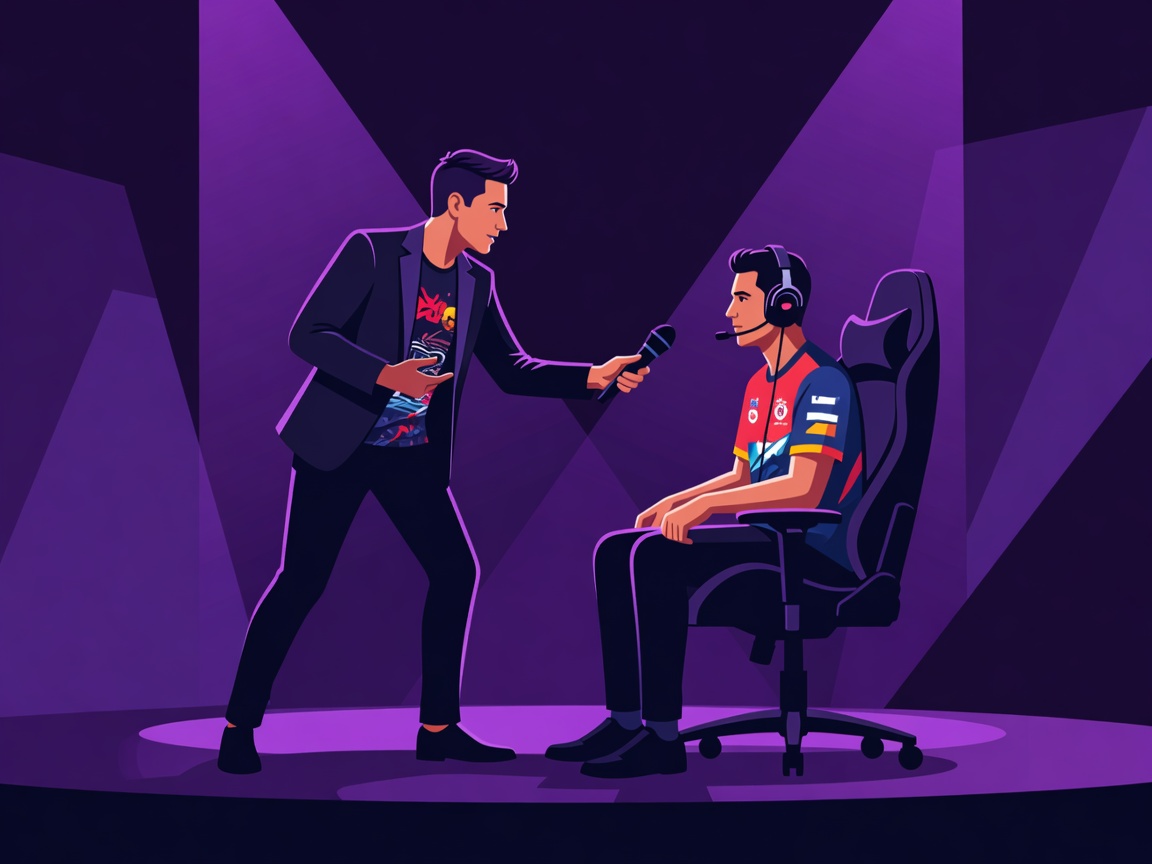
The host is responsible for the audience’s journey through the programme. That can mean introducing a match, inviting a concise answer, explaining a schedule change or landing a transition at the right moment. A desk host creates a structure in which specialists can contribute. An interviewer pursues a useful answer while listening to what the guest actually says. A stage host must also read the room, work with cues and make an arena feel included.
These assignments overlap, but they are not interchangeable. A fluent studio moderator may need preparation for a noisy stage with delayed cues. A strong interviewer may not have demonstrated long desk segments. Specify the setting, the expected improvisation and the communication channels. When reviewing work, look for how the host rescues an unclear answer without embarrassing a guest or stealing the segment.
 Connect the programme
Separate action from interpretation
Play-by-play makes the unfolding contest legible. It identifies the immediate stakes, follows decisive action and uses pace deliberately. More words do not necessarily create more excitement. A good caller leaves room for game sound, notices when a sequence has ended and gives a partner a clean opening. Game knowledge matters because the commentator must recognise what is important before the moment has passed.
Colour commentary explains why a choice matters. It might identify a resource trade in League of Legends, a utility setup in Counter-Strike 2 or an adaptation in VALORANT. The strongest explanations are selective: they support the moment rather than becoming a lecture over the next engagement. Assess the pair as a unit. Do they interrupt each other? Can they disagree constructively? Does one voice consistently prevent the other from finishing?
 Two jobs, shared timing
Make a claim the pictures support
An analyst turns evidence into an explanation. The useful unit is not an impressive statistic; it is a claim, the evidence supporting it and a clear account of what that evidence does not prove. A replay can show a positioning mistake without proving that the same mistake defines an entire team. A desk segment should help the viewer watch the next map or game differently.
Ask whether the analyst can select a replay, explain the production request and finish within an agreed window. Familiarity with a telestrator or graphics system is helpful only when the argument is clear. In Dota 2, draft interpretation may require a different preparation rhythm from a post-round breakdown in Counter-Strike 2. Treat title knowledge, communication and tool fluency as separate questions rather than one vague assessment of expertise.
Allow overlap without hiding workload
Smaller productions often ask a host to interview players or a commentator to join an analysis desk. That can work when the running order allows the person to change tasks and prepare. It fails when the same individual is expected to finish a live call, relocate, receive a briefing and deliver a thoughtful segment immediately. Mark those transitions on the schedule before discussing fees or accepting a combined role.
Titles also vary between productions. “Caster” may describe either member of a commentary pairing, while “analyst” can mean a desk contributor or a colour commentator. Use plain descriptions in the brief. State whether the person is calling live action, leading discussion, questioning guests or preparing replay arguments. A label is useful shorthand only after everyone agrees what the job includes.
Use real broadcasts as reference material
Riot Games’ League of Legends World Championship and VALORANT Champions Tour, ESL’s Intel Extreme Masters, and BLAST’s Counter-Strike broadcasts provide useful material for observing different show structures. They are examples to study, not evidence that every production needs the same headcount. Compare a desk opening with a match call and a post-match interview. Note the handoff, not just the individual performance. None of these examples establishes a person’s current representation or availability.
Reference broadcasts and official competition information: LoL Esports, VALORANT Esports, ESL and BLAST. These sources illustrate production contexts, not universal job specifications.
Next: what representation actually handles